
Winter
How to protect your car from road salt this winter
MnDOT and the counties put salt and brine on the roads from November to April. It ends up on the paint, under the car and in the carpet. Here is what to do about each, in order, from someone who sees the results every spring.
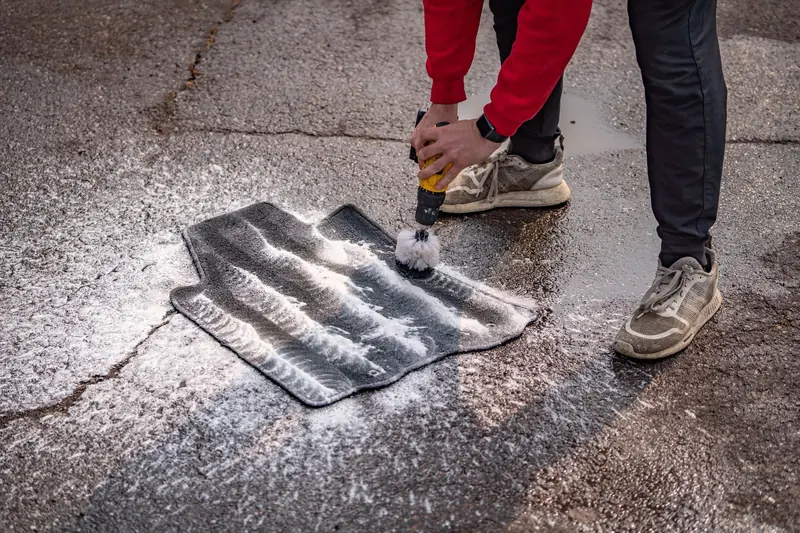
The Northland is as hard on a car as anywhere in the country, and most of the damage is salt. Not the rock salt of twenty years ago, which bounced off, but brine: a liquid chloride mix sprayed on highways before storms that mists onto every surface and dries to a film that pulls moisture out of the air and stays chemically active for weeks. A car that is not looked after here is visibly older at five years than the same car in Arizona at ten. Here is the list.
1. Protect the paint before the salt starts
A paint sealant applied in October takes the brine instead of the clear coat and makes it rinse off. It lasts through the winter. A ceramic coating does the same for years, and is the better buy on a car you are keeping. Either way, the point is that brine on a slick, protected surface runs off; brine on bare clear coat bonds and etches. Exterior detailing with sealant.
2. Swap carpet mats for rubber
Salt comes into the car on boots, melts into the carpet mats and dries into a white crust that wicks into the floor carpet underneath. Rubber or tray-style mats catch it and can be shaken out. If you keep carpet mats, take them out and shake them weekly. Either way, the mats are where the spring interior earns its money.
3. Wash the car, including underneath, every couple of weeks
A touchless wash with an undercarriage spray every two weeks through the winter removes most of the brine before it has time to work. The underside matters more than the paint: brake lines, the subframe, the rocker panels and the wheel wells are where Northland cars rust out. If a wash is not possible, even a hose on a mild day at the wheel wells and rockers helps.
4. Do not let brine dry on the paint in the sun
A warm, sunny January day after a storm is the worst day for the paint: the brine film dries, bakes and etches. Rinse the car on those days if you can.
5. Keep the inside dry
Wet carpet and salt together corrode the floor pan and the seat bolts, and they breed the musty smell that Northland cars get by March. Shake the mats, run the heat with the air conditioning on (it dehumidifies) and do not leave wet gear on the floor overnight.
6. The spring interior
When the salt season ends, the salt in the carpet does not leave by itself. A proper interior detail with hot-water extraction pulls the chloride and the dried slush out of the carpet, the mats and the seat fabric before a summer of humidity turns it into a smell and a stain. This is the single most-booked service we have, every April and May, for good reason. Interior detailing.
7. In the fall, look at the paint
Before the next winter, have the paint assessed. A year of brine, sand and sun shows up as haze and fine scratches, and a one-step correction with a sealant or coating resets it. We do the assessment free. Free paint assessment.
Is undercoating worth it?
It helps if it is applied well and maintained, and it hurts if it chips and traps brine underneath. A regular underside wash is the more reliable habit. Ask us about the car you have.
Can you detail in the winter?
Yes, down to about 32°F, and interiors in colder weather with the vehicle running. Below that we offer pickup and return to our shop for a small charge.